Tokelau Tā Tatau
What is Tokelau Ta Tatau
Tokelau Tā Tatau – Tokelau tattoo: A Re-connection to Cultural Identity. The term "Tā Tatau" refers to traditional Tokelau tattooing, where "tā" means to strike or mark, and "tatau" means tattoo.
Historical accounts of Tokelau tā tatau
The tradition of tattooing in Tokelau, known as tā tatau, is an underexplored aspect of Tokelau culture. Although limited written information exists, a few pivotal works provide valuable insights into this art form.
Gordon Macgregor’s Ethnology of Tokelau Islands (1937) offers detailed accounts of Tokelau tattooing based on field observations by visitors to Tokelau in the 1840’s. These early accounts capture the cultural practices of the Tokelau people before missionaries arrived to Tokelau. Macgregor (1937) citing Wilkins (1841) noted that the influence of missionaries led to the decline of tā tatau, and by 1870, the practice had largely disappeared. Tokelau tā tatau served as markers of identity and status for both men and women. For instance, women were tattooed around their lips with a design called niho ika (fish teeth), while a distinctive lupe design of two parallel lines filled with cris crossed designs around the waist was often received after marriage (Macgregor ,1937).
Macgregor’s work, enriched by earlier accounts from the U.S exploring expedition in the 1840s, documented the visual patterns and cultural significance of Tokelau tā tatau before the practice began to vanish under the pressures of colonisation and missionary influence.
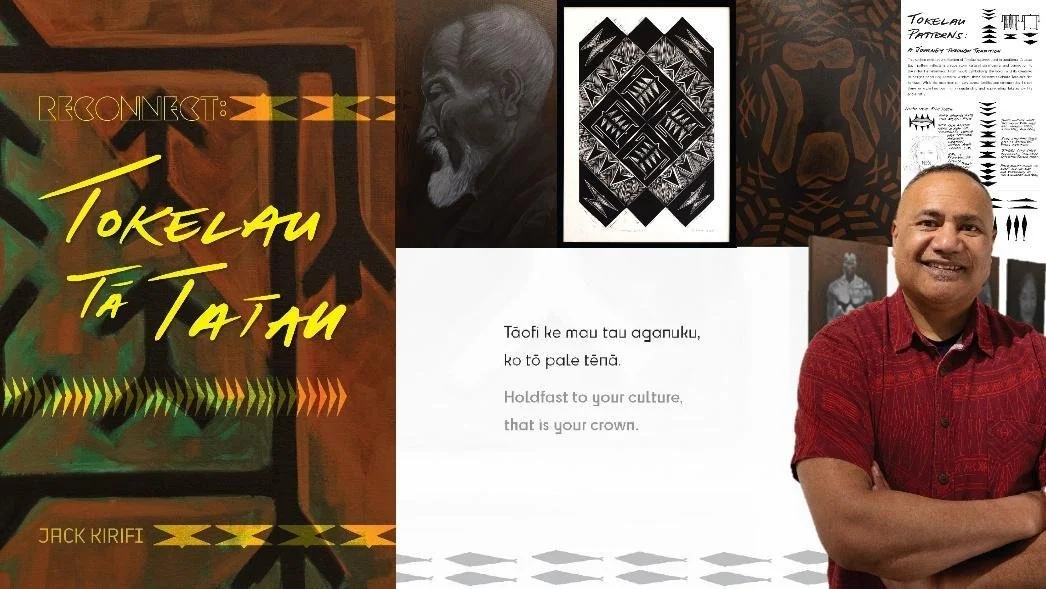
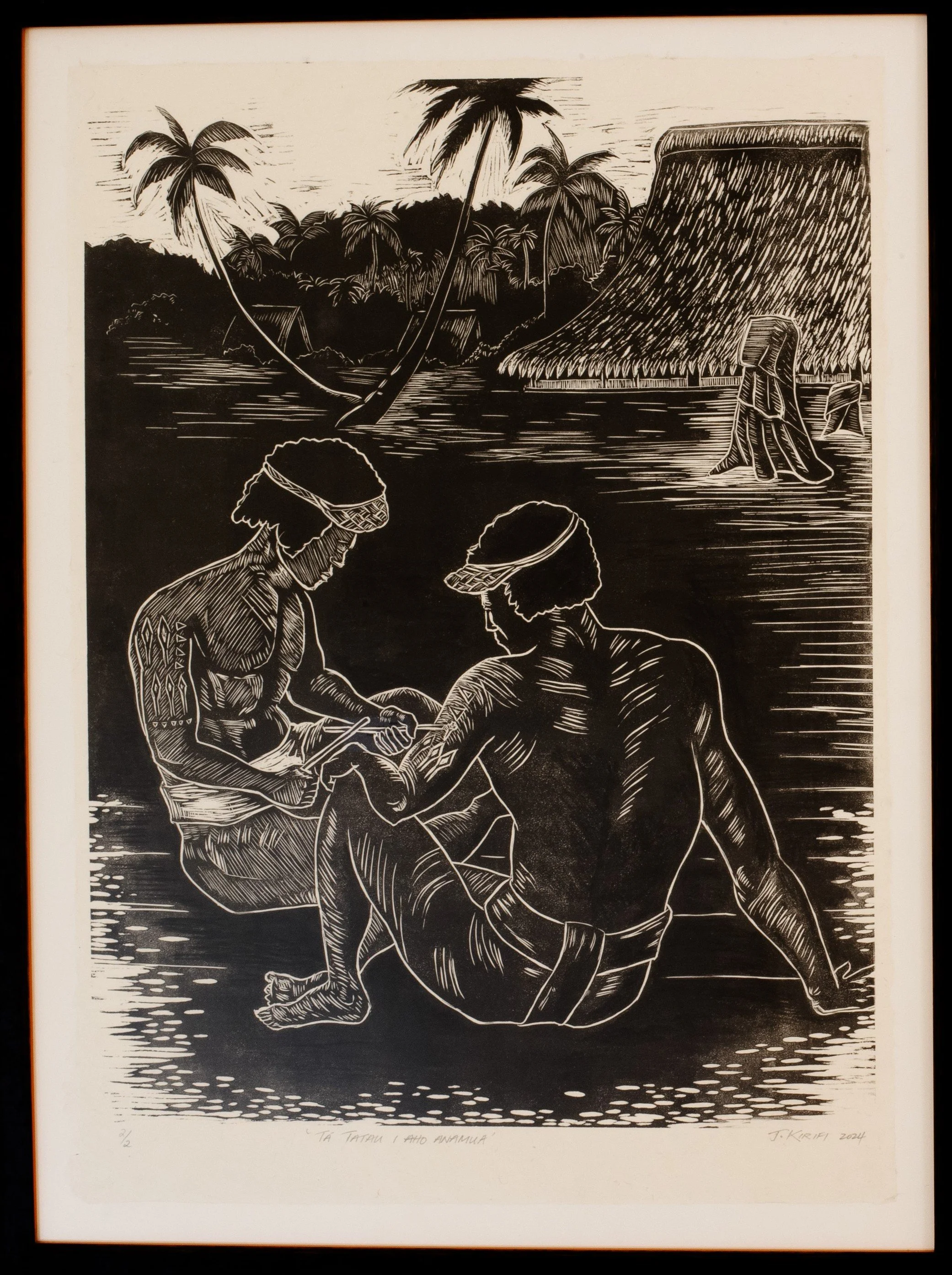
Anthropologist Tony Hooper’s field work in Fakaofo, Tokelau in the 1970’s recorded valuable Tokelau cultural and history given by Tokelau knowledge holders. In 1991 Hooper published ‘Matagi Tokelau’. This work provides a detailed collection of Tokelau culture and history. Citing both Macgregor (1937) and JJ Lister (1887) Hooper references Lister’s historical photographs and accounts of Tokelau tā tatau. Lister (1887) photographed Tokelau people in the late 1800’s. One of these photographs includes Tetaulu who was the aliki (King) of Fakaofo at the time. Lister also recorded a drawing showing Tetaulu’s tā tatau across his chest and upper arms.
Building on Macgregor's work, Dr Sean Mallon, senior curator at Te Papa Museum, published The History of Tokelau Tatau and Tattooing in 2013. Mallon expands on Macgregor’s research, placing it within a contemporary context that resonates with younger generations, especially those in the diaspora of Tokelau communities. Mallon’s work highlights a cultural revival of tattooing, aided by online platforms that enable Tokelau communities to reconnect with their heritage. Mallon’s focus on the resurgence of tā tatau reflects a broader movement to reclaim cultural identity, with tattoos once again becoming symbols of pride and connection for modern Tokelau.
The practice of Tokelau tā tatau ceased in the mid-19th century, with only a few historical accounts recorded by visitors to Tokelau before it was abolished. Although these early accounts and images provide valuable insight to Tokelau tā tatau, little has been documented of the practice from a Tokelau perspective. This is my journey of reconnection to Tokelau cultural identity as well as a pathway for the Tokelau community to reconnect with the stories and knowledge of Tokelau tā tatau.
Today there is a growing interest in Tokelau tā tatau designs across the Tokelau diaspora, particularly amongst the younger generations born outside of Tokelau.
Tokelau tā tatau is reawakening cultural connection and identity that the younger generation of Tokelau are searching for. There is a sense of pride in wearing motifs that are deeply connected to tupuna as opposed to borrowed symbols from other cultures. Tokelau tā tatau motifs have reemerged as modern symbols of Tokelau cultural identity in Tokelau communities today.